
Specialized Mental Health Caseloads
Specialized mental health approaches for people with mental illness on community supervision are a central focus of the HILS Lab’s research. People with mental illness are disproportionately represented on probation, parole, and post-release and face significant challenges completing the terms of their supervision. We’ve conducted several studies on these specialized mental health approaches, including a nationwide study completed in partnership with the Pew Charitable Trusts that (1) summarized prevalence estimates of mental illness; (2) examined mental health training practices and strategies for supervising people with mental illnesses; and (3) described the multilevel challenges of supervising people with mental illnesses.
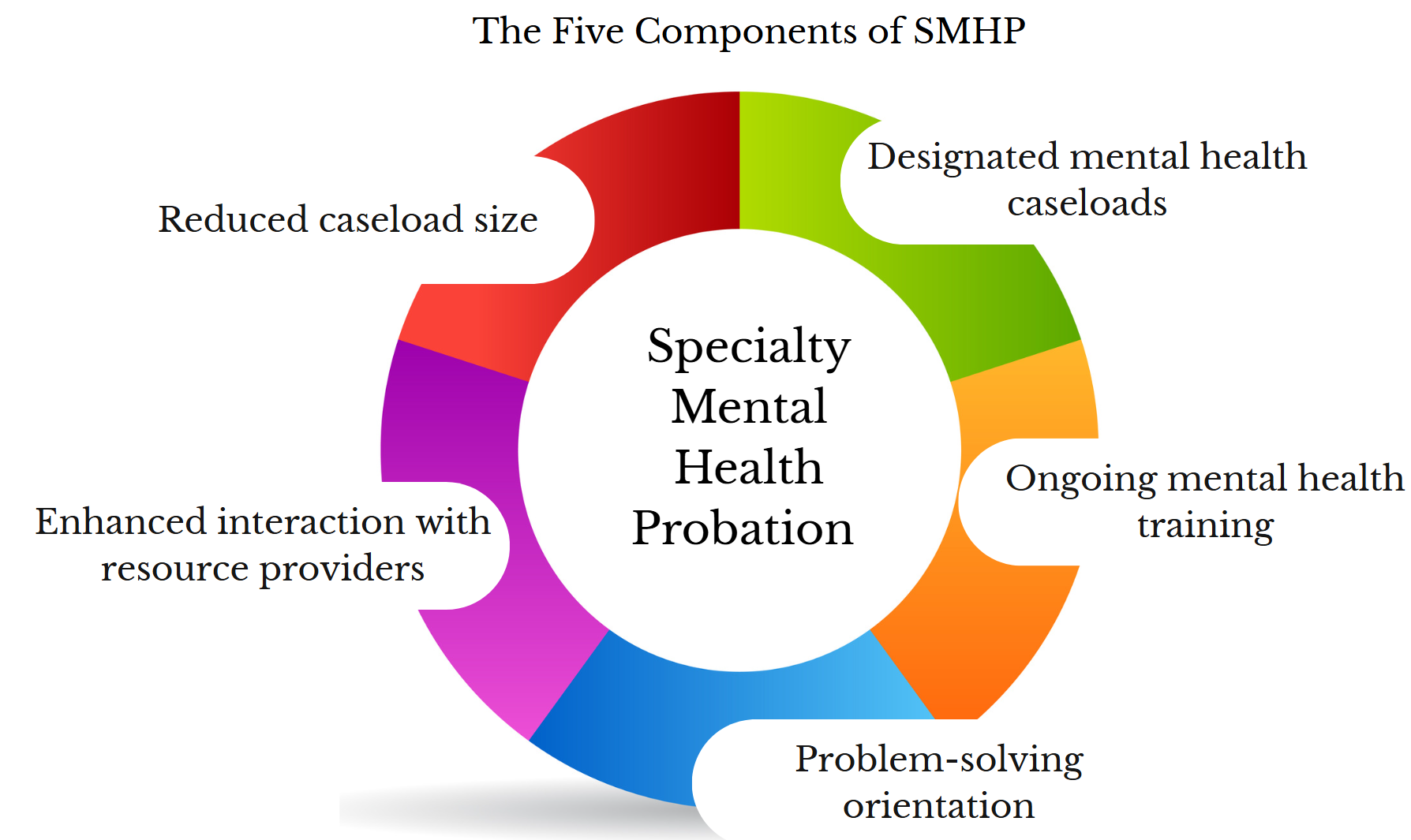
One approach is specialty mental health supervision (SMHS), which includes:
Designated mental health caseloads
Reduced caseload size (~40-45 supervisees)
Ongoing mental health training
A problem-solving orientation
Enhanced interaction with behavioral health and other resource providers
Our work has helped translate SMHS research into practice. Since 2014, members of the HILS lab and other faculty from the School of Social Work have collaborated with the North Carolina Department of Adult Correction to pilot and evaluate SMHS. Our work has helped translate SMHS research into practice. Since 2014, members of the HILS lab and other faculty from the School of Social Work have collaborated with the North Carolina Department of Adult Correction to pilot and evaluate SMHS. The HILS Lab continues this collaboration through the Networking to Engage in Treatment: Working with Officer-Resource Collaborative (NETWORC) study (K01MH129619), which focuses on strengthening collaboration between SMHS officers and behavioral health providers.
Our lab has also worked with the Georgia Department of Community Supervision since 2022 on a Bureau of Justice Assistance project to implement clinical case consultation for SMHS officers, an implementation strategy aimed at enhancing officers’ capacity to implement SMHS.
Learn more about our specialty mental health supervision projects: